Role
Principal UI/UX Designer
Design Scope
UI/UX Design
Interaction Design
UX Research
Timeline
June 2025 – September 2025
Collaboration with…
UX team
Project Management
Developers
The Ask
Financial advisors want access to their entire book of business at a glance and establish their client records from a single source of truth.
Advisors want a built-in customer relationship management platform within the tool that can show them high-impact events that require immediate action.
My Role
As the Principal Designer of this product, I conducted competitive research to understand competitive CRM platforms' offerings and create an entire new dashboard to fit within the information architecture of the product. This new feature also introduced many more components to the product design library, all of which was documented for future reference.
Our results
👨🏼💻🧑🏻💻👩🏽💻
major learnings
our research and design explorations gave us insights into user motivations and mental models
⚙️
120+ design components
& interactions
new design components and interactions to expand design library and broaden product design language
Design Solutions
Module Designs & Design Hurdles
The client asset management platform (CAMP) contains modules housing financial information that visualize an advisor's book of business through different lenses. An interface with numerous data modules each doing different things will inevitably have design issues, which were overcome by refining the modules' relationships with one another. We were always asking "what would a financial advisor with 100+ clients want to see about their book of business?""
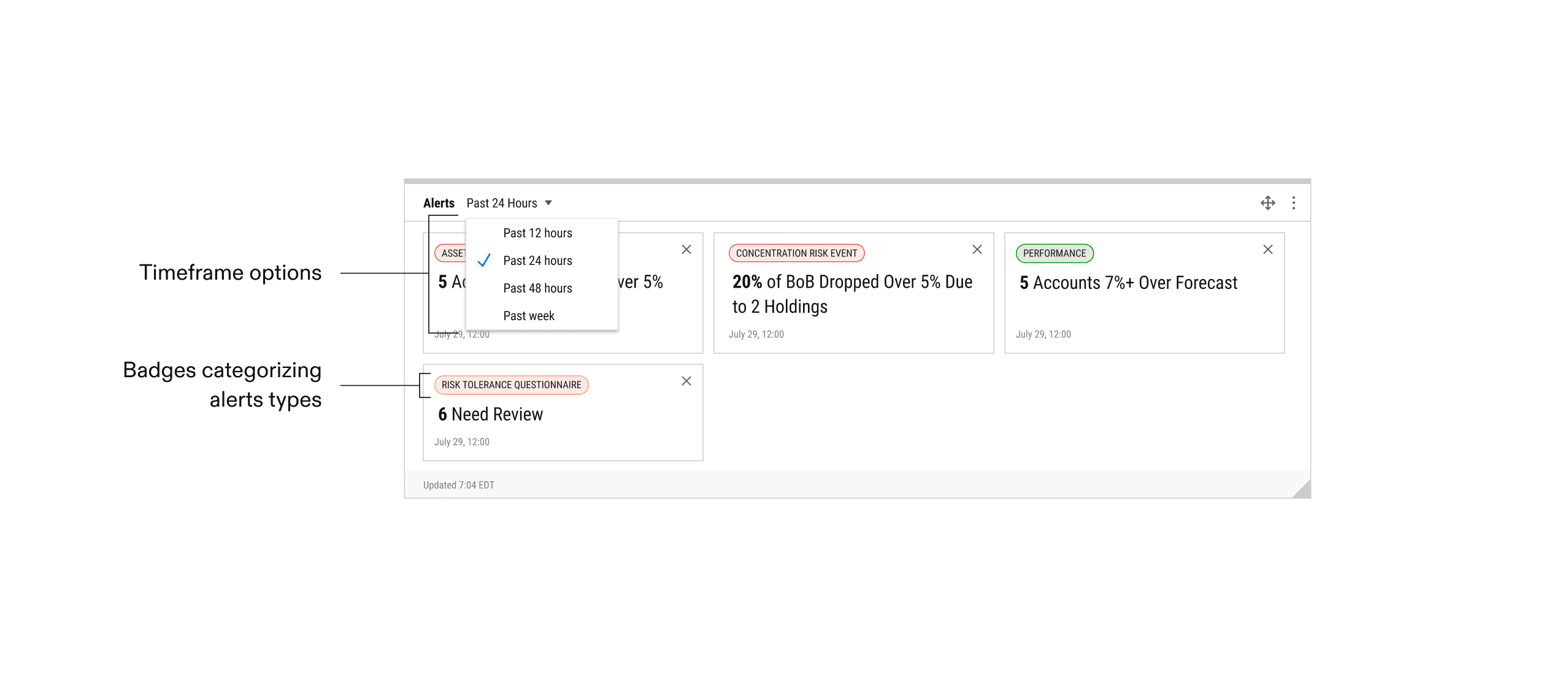
Alerts Module
Book of Business
Module
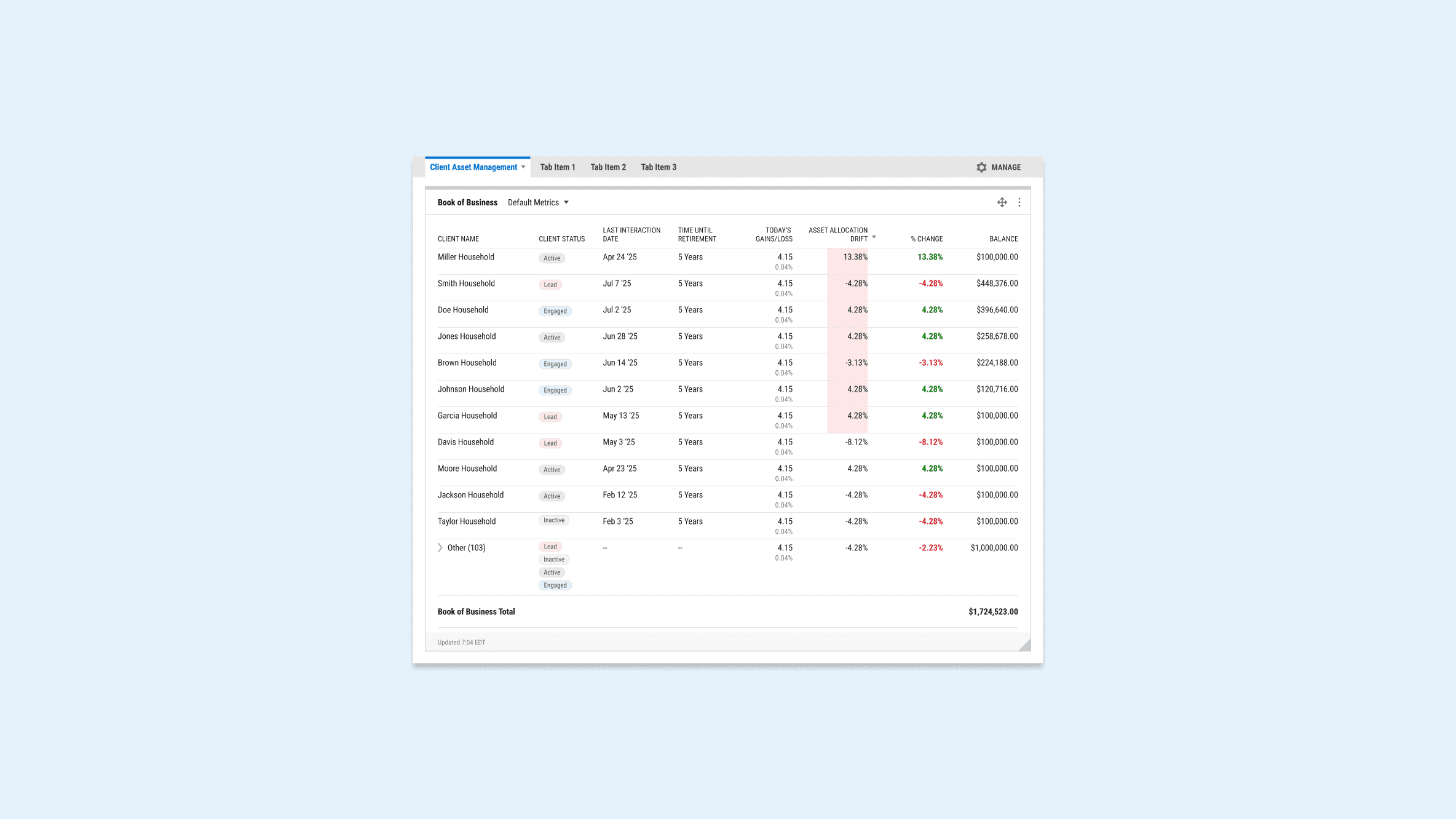
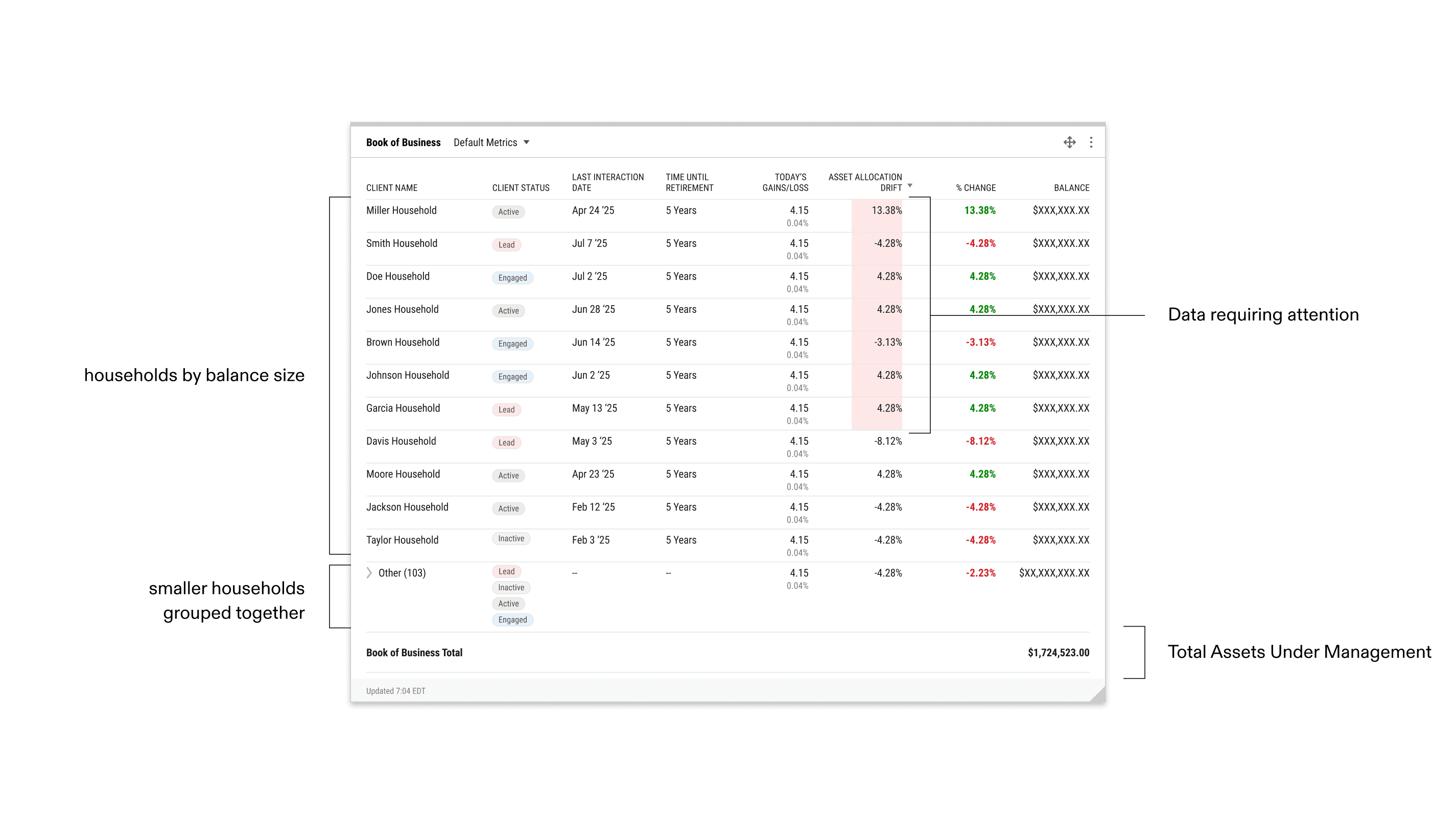
Advisors want to see their book of business visualized to be able to flag issues requiring action and ensure regulatory compliance. Serving as the advisor's command center, the book of business module gives financial advisors a high-level view of their book of business. We opted for a table of customizable financial metrics as columns and the advisor's client accounts as individual rows. The table is treated with as little visuals as possible to reduce visual noise and dive straight into the data. Data points fitting alert requirements are highlighted for advisors to take immediate action.
book of business module
Design Problem: Limitations of Real Estate
The Problem
Project management needed other higher-level data visualization modules to be above the book of business that advisors would want to see first. This led to the book of business being too far down the page.
The Solution
We decided to leverage the alerts module to interact with the book of business, creating an organic workflow for advisors to take action on high-impact events in their book of business.
When an alert populates the alerts module at the top of the page, the advisor will be able to click on the alarm which anchor links to the book of business where the relevant data will be highlighted. Directly from the module, the advisor can then be directed to the client’s records.
book of business module showing data requiring action
Snapshot Metrics
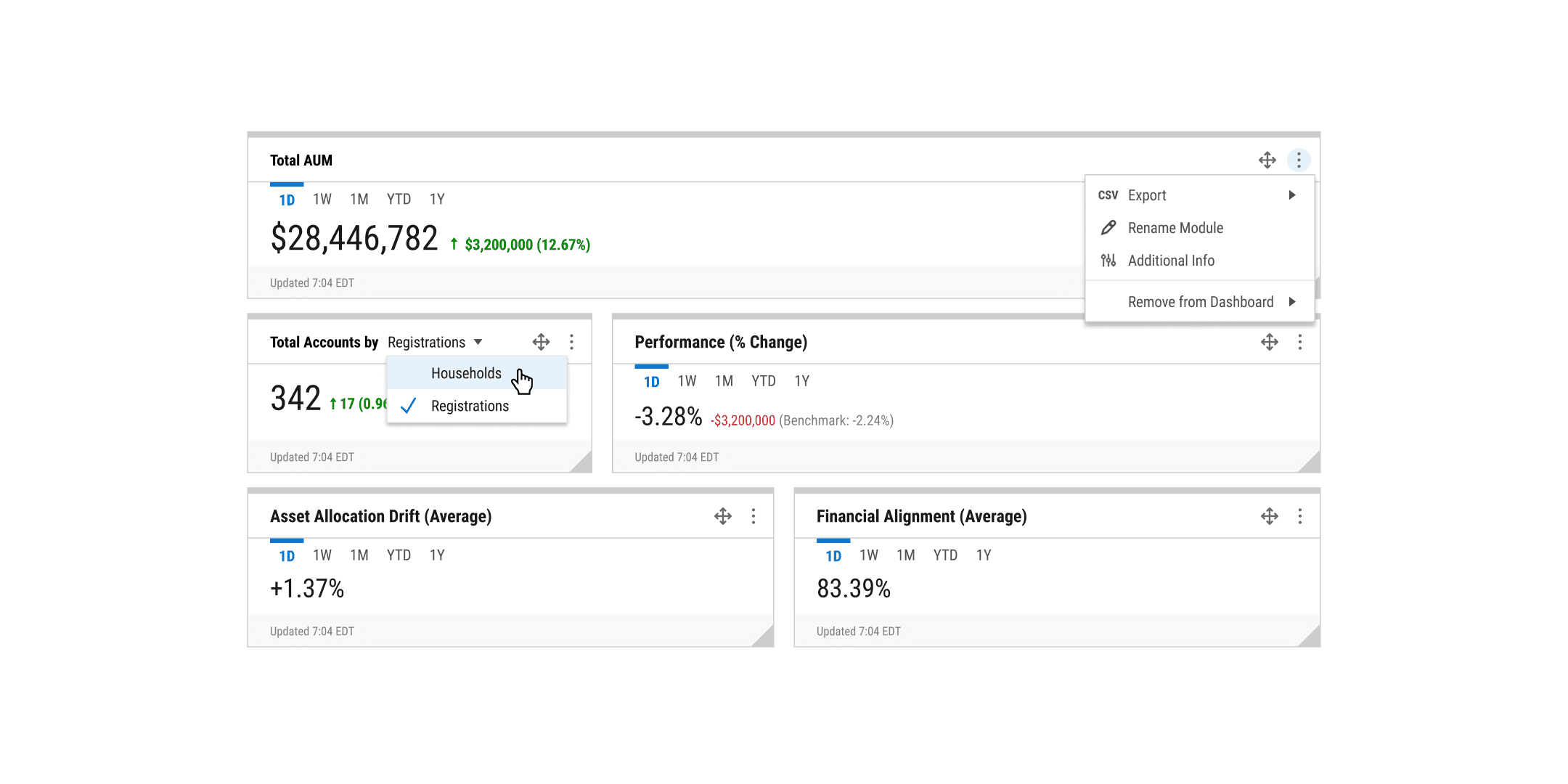
snapshot metric cards with responsive sizing
Calendar Module
Advisors need a way to stay on top of client meetings, important deadlines, and broader team and business activities that is more integrated into their workflows than simply using Google Calendar.
We designed and created calendar within the Client Asset Management Platform that tracks advisor events, client activity, and integrates external calendars. Design conventions of the most widely used calendar interfaces were followed because familiarity reduces friction.
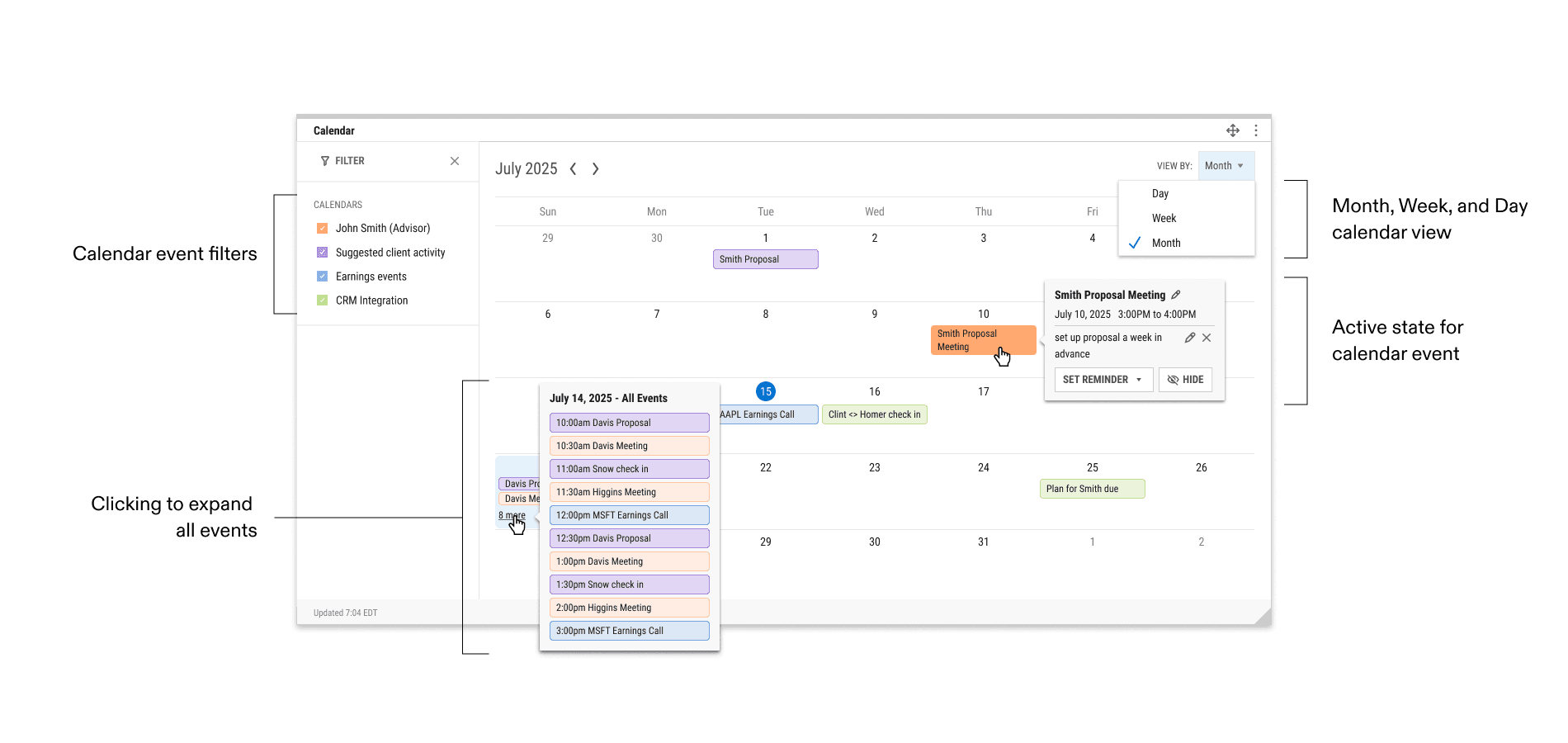
calendar design interactions
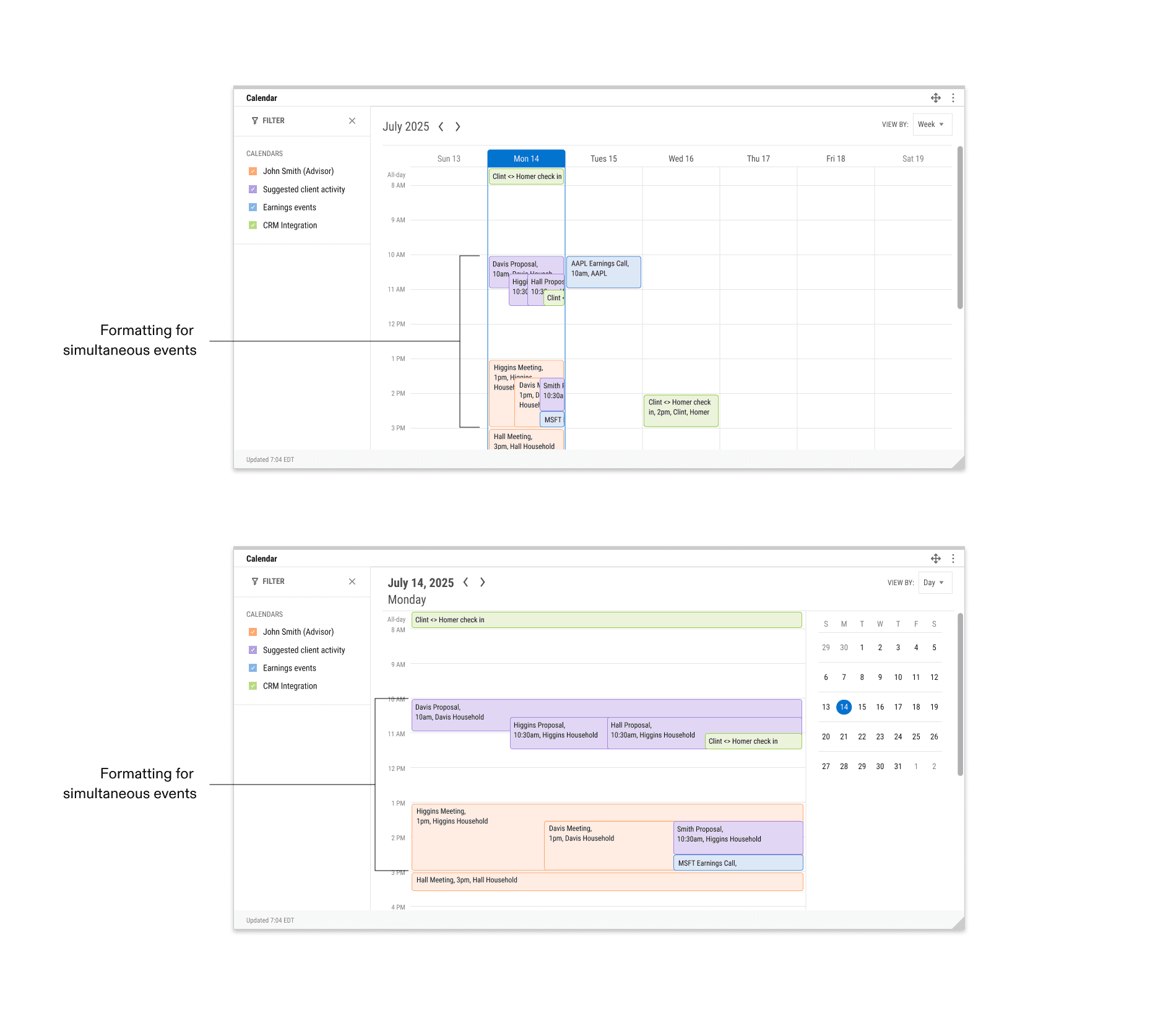
week (above) and day (below) calendar view formatting
🌱
new design foundation
initial MVP laid the foundation for client relationship platform & additional features
📚
expanded design library
new accordions, badges, cards and even a whole calendar component were created, maturing the product design language
⏱️
4 weeks ahead of roadmap
design fix meetings that would have spanned 4 weeks were avoided due to early design conversations + user feedback